
Lumpwood Charcoal vs Briquettes: Which Charcoal Is Better for BBQ?
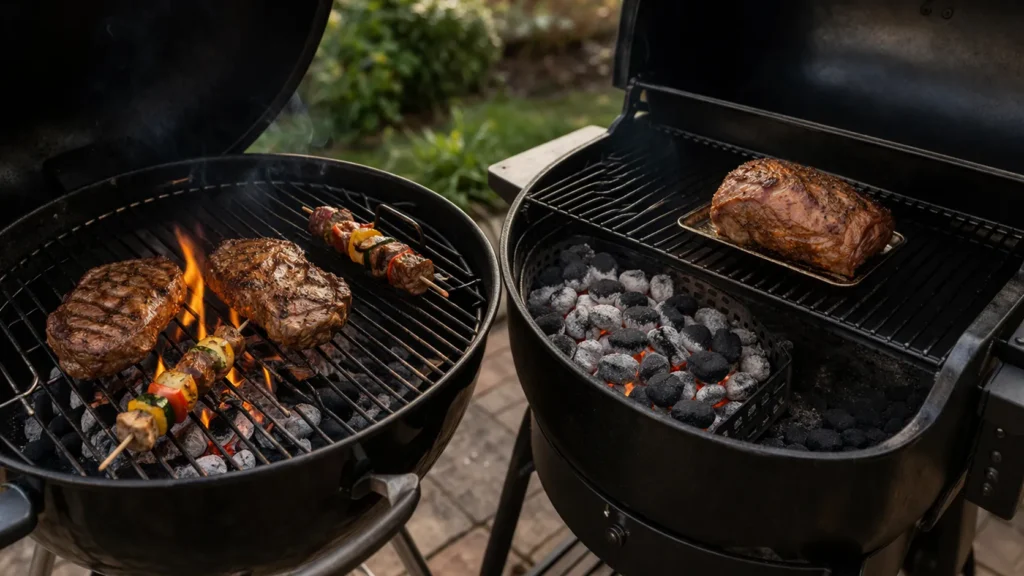
When people compare lumpwood charcoal and briquettes, they are usually trying to answer one question: which one will actually give better results on the BBQ? There is no universal winner. The right choice depends on what you are cooking, how long you need the fire to last, and how much control you want over the heat.
At Top BBQ, we regularly help customers choose the right fuel for everything from quick midweek grilling to long weekend cooks. Once you understand how these two charcoal types behave, choosing between them becomes much easier.
If you are still deciding between fuel and cooker types, our guide to gas BBQ vs charcoal BBQ is a useful place to start.
The key difference between lumpwood charcoal and briquettes
In simple terms:
- Lumpwood charcoal lights faster and reaches higher temperatures more quickly
- Briquettes burn more steadily and usually last longer
- Lumpwood is more reactive when you adjust the airflow
- Briquettes are easier to manage over longer cooks
Neither is better in every situation. The better option is the one that suits the way you BBQ.
What is lumpwood charcoal?
Lumpwood charcoal is made from real pieces of wood that have been heated in a low-oxygen environment until only carbon-rich charcoal remains. Virginia Tech explains this charcoal-making process as controlled heating with very little oxygen.
Because it is made from natural pieces of wood, lumpwood comes in irregular sizes and shapes. Some pieces are large and slow-burning, while others are smaller and catch quickly. That gives it a more traditional, live-fire feel, but it also means it can behave less evenly than briquettes.
Why do people like lumpwood charcoal
Lumpwood is often the preferred choice for cooks who want fast, high heat.
Its main advantages are:
- Quick to light
- Reaches high temperatures fast
- Responds quickly when vents are opened or closed
- Produces less ash
- Gives a more traditional charcoal cooking experience
That makes it especially useful for steaks, burgers, skewers, and other foods that benefit from strong direct heat.
Where lumpwood can be less convenient
The same qualities that make lumpwood appealing can also make it less predictable.
Potential downsides include:
- Uneven piece sizes
- Shorter and less consistent burn times
- Smaller pieces can burn away quickly
- Some lower-quality bags contain dust and fragments
For shorter cooks, that is rarely a problem. For longer sessions, you may need to keep a closer eye on the fire and make more adjustments.
What are briquettes?
Briquettes are manufactured charcoal pieces pressed into regular shapes. Their biggest strength is consistency. Because each piece is similar in size and density, they tend to burn more evenly than lumpwood.
That makes them particularly useful when you want a stable, controlled fire over a longer period.
Why briquettes work well for longer cooks
Briquettes are often the easier option if you want reliable heat with less effort.
Their main benefits are:
- Easy to stack and arrange
- Burn more evenly across the BBQ
- Usually lasts longer than lumpwood
- Ideal for roasting, smoking, and indirect cooking
- Easier for beginners to control
Their regular shape also makes it easier to create an even charcoal bed, which helps when setting up separate cooking zones.
Where briquettes fall short
Briquettes are dependable, but they are not always the best choice for quick, high-heat grilling.
Possible drawbacks include:
- They take longer to reach full temperature
- They often produce more ash
- Some products contain binders or additives
- They respond more slowly when airflow changes
If you want a lively fire that reacts quickly, briquettes can sometimes feel a little slow.
Lumpwood charcoal and briquettes compared
| Feature | Lumpwood charcoal | Briquettes |
| Lighting time | Faster | Slower |
| Heat level | High | Steady and moderate to high |
| Burn consistency | Less even | More even |
| Burn duration | Shorter | Longer |
| Ash output | Lower | Higher |
| Vent response | Fast | Slower |
| Best for | Grilling and searing | Roasting, smoking, and long cooks |
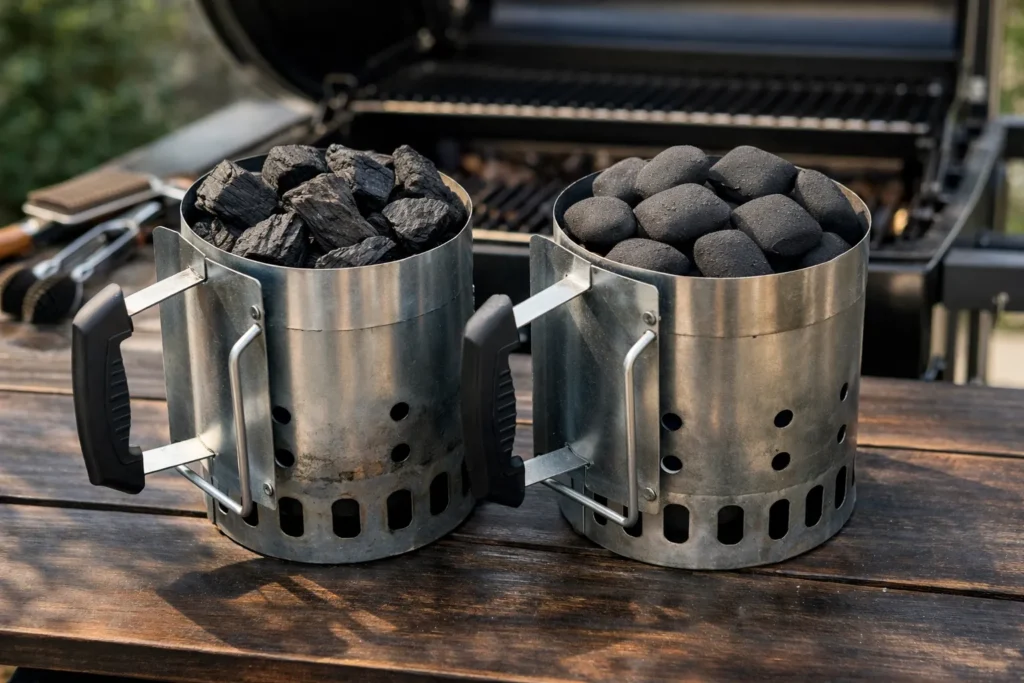
The key difference is that lumpwood is built for speed and high heat, while briquettes are built for consistency and control.
Which one gives better flavour?
This is often the most debated part of the comparison. Lumpwood is usually seen as the more natural option because it comes from real pieces of wood rather than compressed charcoal. Many people feel that it gives food a more traditional BBQ flavour.
In practice, flavour depends on more than the fuel itself. It is also affected by:
- the quality of the charcoal
- how cleanly it burns
- airflow through the BBQ
- whether fat and juices hit the coals
- whether you add smoking wood
Good briquettes can still produce excellent flavour when used properly. More often than not, fire management has a bigger effect on the final result than the charcoal itself.
If you want to experiment with smoke flavour, our guide to everything to know about hot smoking explains how to get more from your BBQ.
Which one is easier to control?
For most people, briquettes are easier to control. Their even shape makes it simpler to build a tidy charcoal bed and maintain a stable temperature over time.
Lumpwood is more responsive, but that also means it can be more demanding. Because the pieces are uneven, changes in airflow can affect different areas of the fire more noticeably.
That is one reason lumpwood remains popular in ceramic and kamado-style cookers, where fine control over airflow is part of the cooking process. If you are considering that sort of setup, our guide to choosing a Kamado Joe BBQ explains why fuel choice matters.
What about ash and clean-up?
Lumpwood generally leaves behind less ash than briquettes. That matters because excess ash can restrict airflow, particularly during longer cooks.
A peer-reviewed study in ACS Omega found that the briquette samples tested had noticeably higher ash content than the lump charcoal samples.
That does not make briquettes the wrong choice, but it is something to bear in mind if easy clean-up and unrestricted airflow are important to you.
A dependable charcoal option
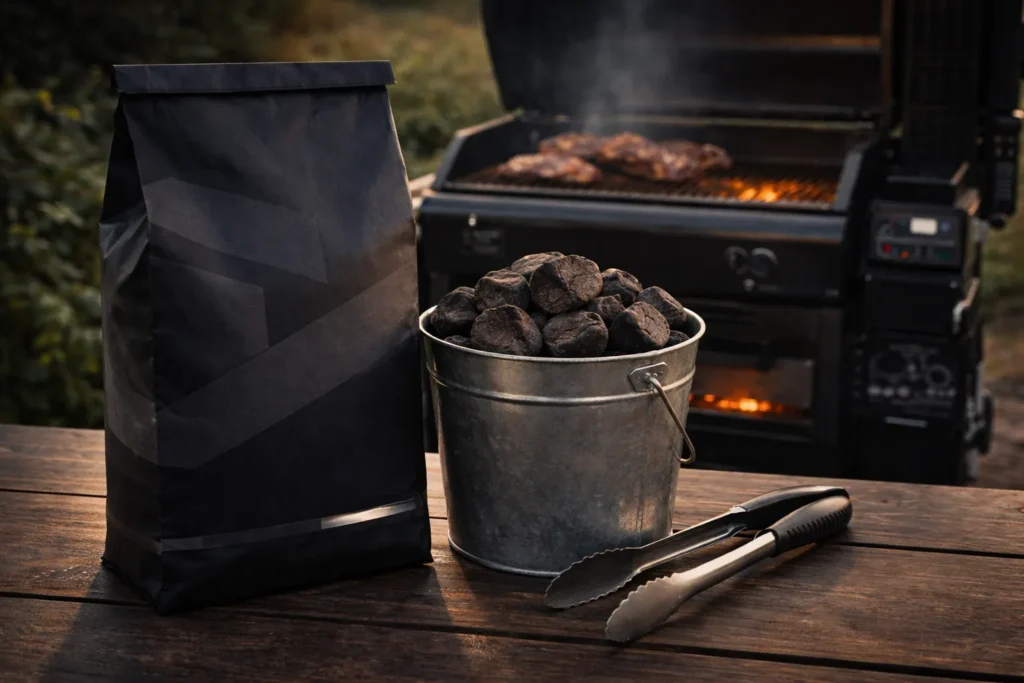
Whichever type of charcoal you prefer, quality makes a real difference. Poor-quality fuel can burn unevenly, create unnecessary ash, and make temperature control much harder than it needs to be.
If you want a charcoal product designed to give more dependable performance, take a look at Masterbuilt Charcoal. It is a good option if you want a more reliable cooking experience with less guesswork.
Which one should you choose?
As a general rule:
Choose lumpwood charcoal if you want:
- Fast lighting
- Higher temperatures
- Less ash
- A more traditional live-fire feel
Choose briquettes if you want:
- Longer burn times
- More stable temperatures
- Easier temperature control
- Better results on slower cooks
Many experienced BBQ cooks keep both on hand. Lumpwood is ideal when speed and heat matter most. Briquettes come into their own when you want a slower, steadier cook.
Safety still matters
Whichever type of charcoal you use, it should only ever be burned outdoors or in properly ventilated cooking equipment. The CDC’s carbon monoxide guidance warns that charcoal can produce dangerous levels of carbon monoxide and should never be used indoors.
Final thoughts on choosing the right charcoal
There is no single best fuel for every BBQ. Lumpwood is usually the better choice when you want fast lighting, high heat, and a more hands-on cooking experience. Briquettes are often the better option when you want longer burn times, steadier temperatures, and a fire that is easier to manage.
The simplest approach is to match the charcoal to the cook. If you are grilling burgers, steaks, or skewers over direct heat, lumpwood often makes more sense. If you are planning a slower roast or a longer cook, briquettes are usually easier to live with.
Many experienced BBQ cooks keep both in the shed for exactly that reason. One is built for speed, the other for control. Like most things in BBQ, the best choice depends on what is on the grill.