
How Do You Use a Smoker BBQ? A Practical Guide to Getting Started
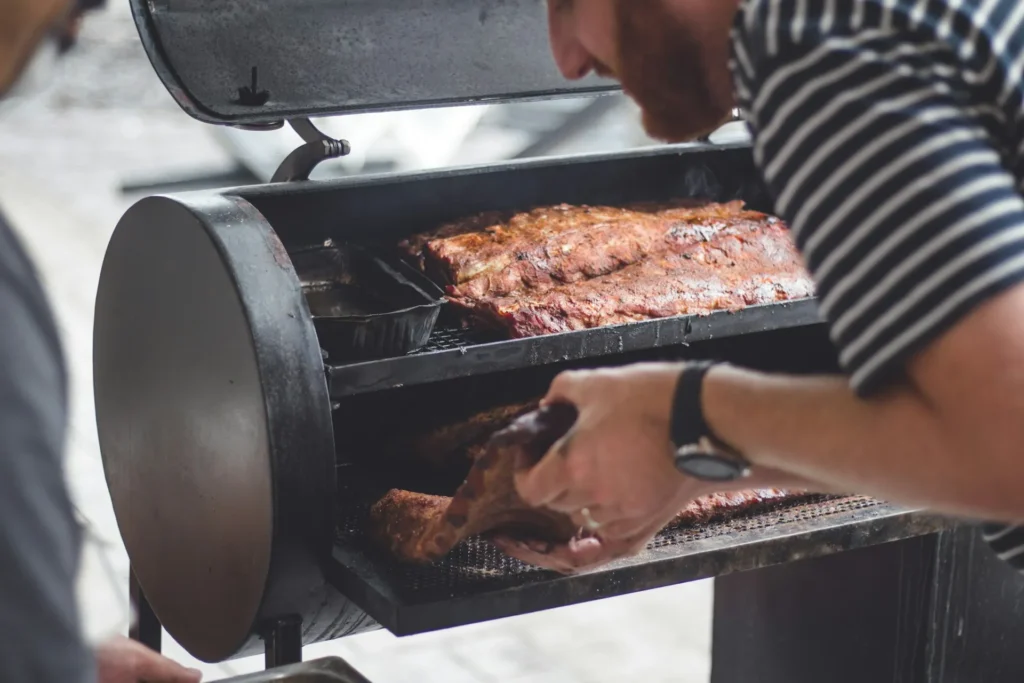
If you are asking how to use a smoker BBQ, it is easier to get started than many people expect. At its core, smoking comes down to steady heat, clean smoke, and enough patience to let the cooker do its job.
At Top BBQ, we often find first-time users are less held back by the food itself and more by learning how to control heat and airflow. That is usually the part that feels unfamiliar at first. Once the setup is right, though, a smoker BBQ becomes one of the most rewarding ways to cook outdoors.
If you are new to smoking, our guide to everything to know about hot smoking is a useful place to start before moving on to your first cook.
What does a smoker BBQ do?
A smoker BBQ cooks food indirectly at a lower temperature over a longer period. Unlike direct grilling, where food sits above fierce heat, smoking keeps the food away from the main fire while warm air and smoke circulate around it.
That slower method gives larger cuts more time to become tender and develop flavour. It is why smoker BBQs are commonly used for:
- pork shoulder
- ribs
- brisket
- whole chicken
- beef short ribs
- larger joints of meat
Smoking is less about speed and more about control.
How do you use a smoker BBQ step by step?
Step 1: Choose the right fuel
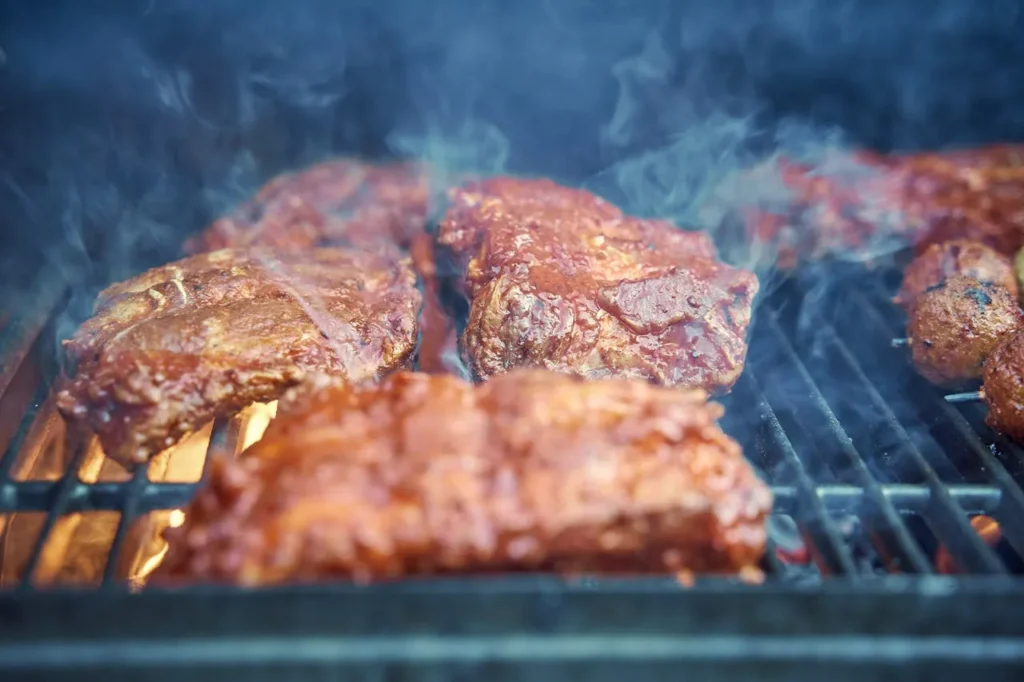
Most smoker BBQs use charcoal as the main heat source, with wood chunks added for smoke flavour.
The charcoal provides the base heat. The wood adds the smoke character. If the charcoal burns unevenly, the smoker temperature becomes harder to manage, especially once the food is already on.
In practice, inconsistent fuel is one of the most common reasons beginners struggle to hold a steady smoker temperature. For longer cooks, that matters a great deal more than people expect. Lumpwood charcoal usually lights faster and burns hotter, while briquettes tend to burn more steadily for longer.
Step 2: Light the smoker and let it settle
A common mistake is putting the food on before the smoker has settled.
Light the charcoal, close the lid, and give the cooker time to stabilise before adding anything to the grate. The aim is to let the smoker settle into a steady working range rather than trying to correct a rising fire halfway through the cook.
For most smoking, a useful starting range is around 110°C to 135°C. That is hot enough to cook food safely and steadily without turning the smoker into a standard direct grill.
As a starting point:
- Lower temperatures suit larger cuts such as brisket or pork shoulder
- Slightly higher temperatures can work well for chicken, sausages, or ribs
- A stable temperature matters more than chasing a perfect number
Step 3: Set up indirect cooking
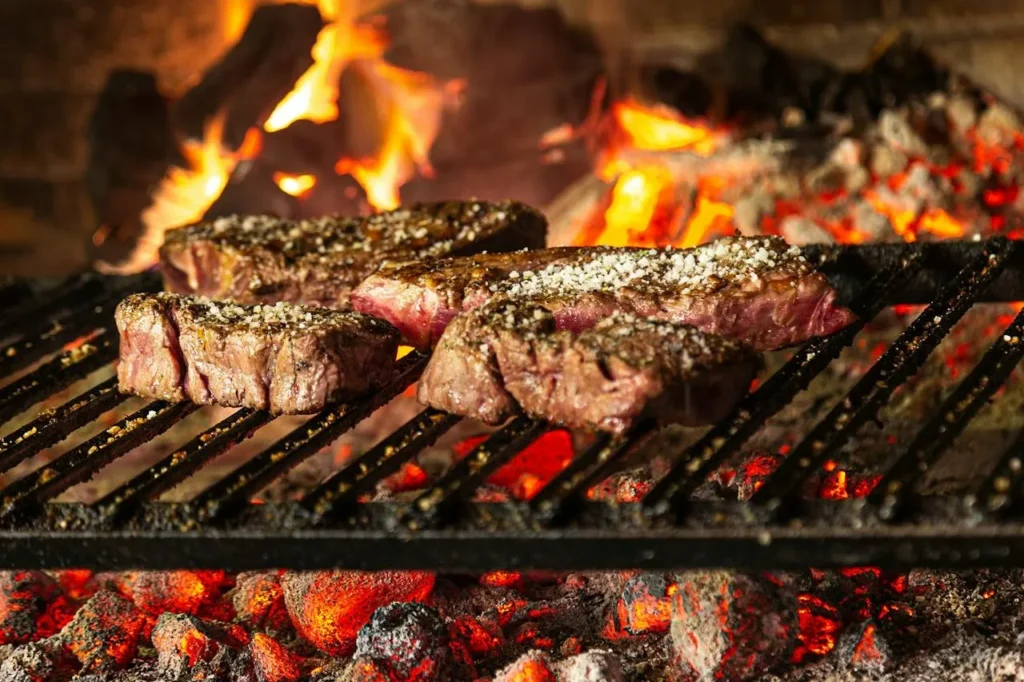
A smoker BBQ should be set up for indirect cooking. That means the food should not sit directly over the main fire.
Depending on the cooker, that may mean:
- Placing the charcoal in a side chamber
- Banking the charcoal to one side
- Using a charcoal basket
- Placing the food on the opposite side of the heat source
Here is a simple comparison:
| Cooking setup | Where the food sits | Best for |
| Direct heat | Directly above the coals | Burgers, steaks, sausages |
| Indirect heat | Away from the coals | Ribs, chicken, pork shoulder |
This matters because indirect cooking protects the outside of the meat while the internal temperature rises more gradually.
If you are using a ceramic cooker, our guide to choosing a Kamado Joe BBQ explains how these BBQs hold heat and make indirect cooking easier.
Step 4: Add wood for smoke
Once the smoker is stable, add a small amount of wood to create smoke. Wood chunks are usually easier to manage than wood chips because they burn more slowly and are less likely to flare up too quickly.
Different woods create different flavour profiles:
| Wood type | Typical flavour | Best with |
| Oak | Balanced and smoky | Beef, lamb |
| Apple | Mild and slightly sweet | Chicken, pork |
| Hickory | Strong and rich | Ribs, pork shoulder |
| Cherry | Light and fruity | Chicken, pork |
Wood should support a stable fire, not smother it. Too much wood too early often creates heavier smoke and less control. You want a thin, clean stream of smoke rather than thick clouds pouring from the vents.
Step 5: Leave the lid closed
Once the food is cooking, avoid opening the smoker more than necessary.
Each time the lid is lifted:
- Heat escapes
- Smoke escapes
- Airflow changes
- The cooking time can stretch out
Opening the smoker affects both chamber temperature and smoke circulation, which is why repeated checking can slow things down more than people realise.
Step 6: Use a thermometer
Smoking becomes much easier when you stop guessing and start measuring.
The two temperatures that matter are:
- the temperature inside the smoker
- the internal temperature of the food
A built-in lid thermometer is useful, but a digital probe is usually more accurate and easier to trust over a longer cook.
As a rough guide:
- The chicken should reach 74°C
- Pork and beef joints should reach at least 63°C before resting
- Larger cuts, such as brisket and pork shoulder, usually need a much higher internal temperature to become tender
For food safety, the Food Standards Agency’s BBQ safety guidance recommends checking that meat is cooked thoroughly before serving.
What foods are easiest to smoke first?
If you are using a smoker BBQ for the first time, it makes sense to start with something forgiving rather than jumping straight into a full brisket.
Good beginner-friendly options include:
- chicken thighs
- whole chicken
- pork ribs
- sausages
- pork shoulder
These cuts still teach you the basics of smoke balance, temperature control, and timing, but with a little more room for error.
Once you feel more confident, you can move on to larger and slower cooks. Our prime rib recipe on a Kamado Joe BBQ is a good example of what you can try once you are comfortable managing a smoker.
Common smoker BBQ mistakes to avoid
Most early problems with smoker BBQs come back to the same few setup habits.
Using too much smoke
More smoke does not mean better barbecue. Thick, heavy smoke often leaves food tasting bitter.
Cooking too hot
If the temperature climbs too high, the outside of the meat can cook too quickly before the inside has properly caught up.
Opening the lid too often
Every check costs you heat and disturbs the cooking environment.
Choosing inconsistent fuel
Poor charcoal can burn away too quickly or unevenly, which makes temperature control far more frustrating than it needs to be.
A smoker BBQ that makes things easier
For beginners, the cooker design can make temperature control much easier.
If you want the flavour of charcoal without constantly adjusting vents and fuel, the Masterbuilt Gravity Series 600 Digital Charcoal BBQ Smoker is well worth a look. Its gravity-fed charcoal system is designed to hold temperature more steadily, which helps take some of the stress out of low-and-slow cooking.
That matters most on longer cooks, where steady temperature control is usually the biggest challenge. If you want a smoker BBQ that helps you spend less time battling the fire and more time enjoying the cook, take a closer look at the Masterbuilt Gravity Series 600.
Smoker BBQ safety matters too
A smoker BBQ should only ever be used outdoors and in a well-ventilated area. Burning charcoal indoors or in enclosed spaces can be dangerous because it produces carbon monoxide.
The NHS guide to carbon monoxide poisoning explains the risks and why charcoal should never be used inside garages, sheds, tents, or enclosed patios.
Final thoughts
Using a smoker BBQ well comes down to stable heat, clean smoke, and patience.
Choose reliable fuel, let the smoker settle before cooking, set it up for indirect heat, and trust your thermometer more than guesswork. That is usually what turns smoking from a frustrating first attempt into a process you actually enjoy.
Your first cook does not need to be ambitious. Start simple, learn how your smoker behaves, and build from there. Once the basics are in place, low-and-slow cooking starts to feel far more straightforward and a good deal more rewarding.